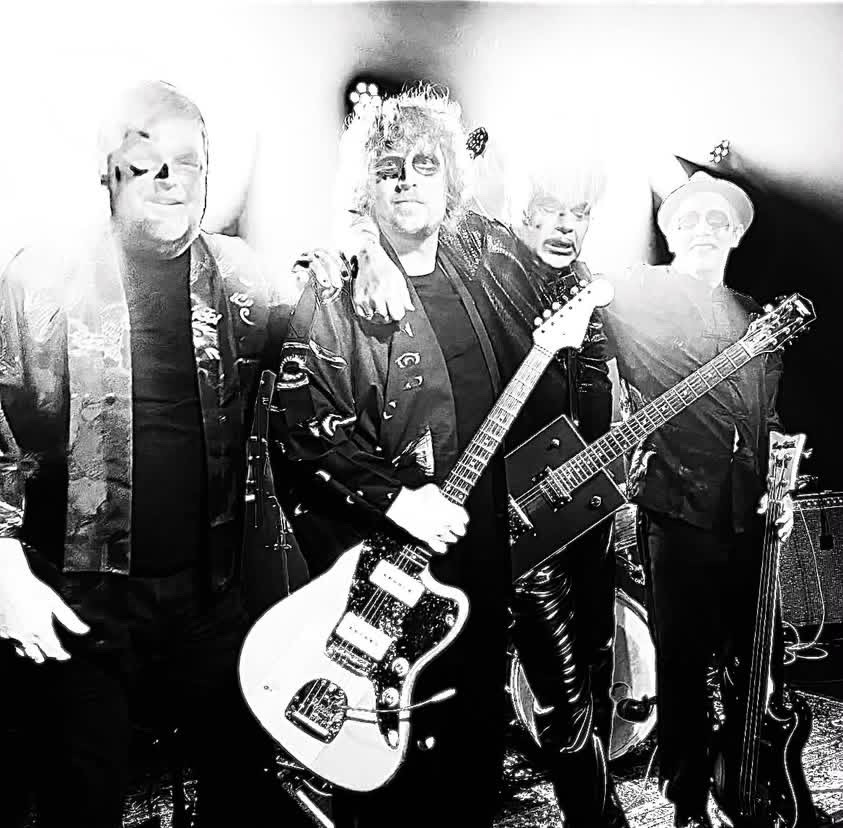
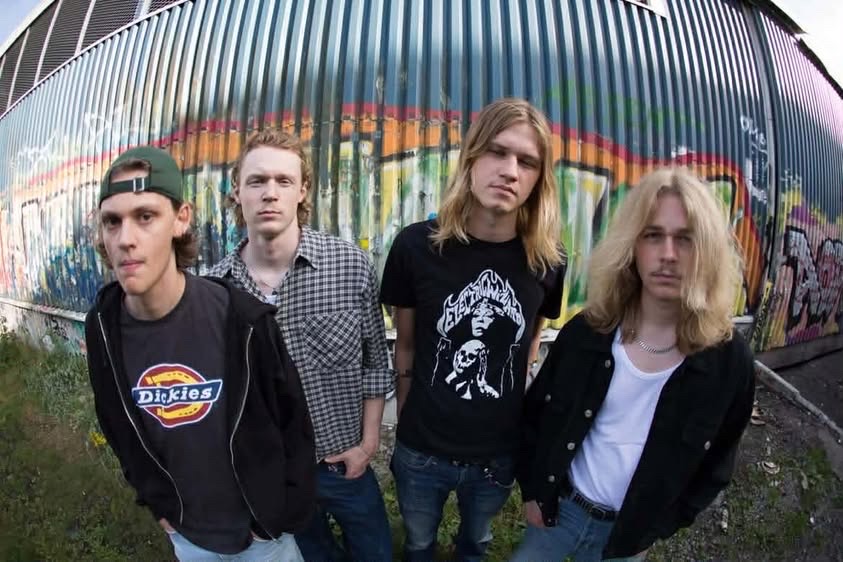
”Most punk thing is to play a bagpipe through a broken Marshall stack.”
Vox Vulgaris ·
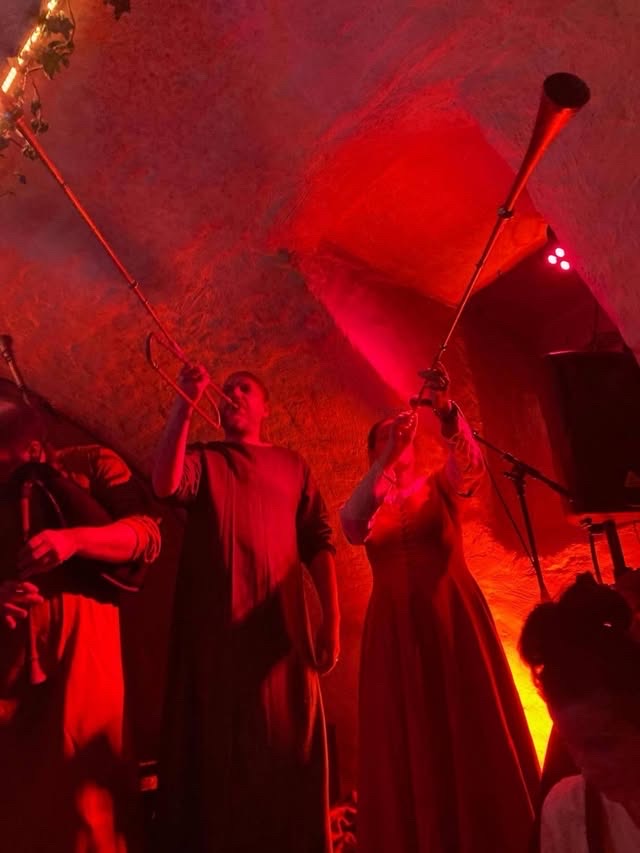
Vox Vulgaris are playing tomorrow, Friday, at Spice H2O’s medieval-themed spiritual night. We managed to get a short interview with this highly intriguing band, who make psychedelic and danceable music on medieval instruments.
q: How long has Vox Vulgaris existed? Have you always had the same members? Tell us about your history.
a: We formed in the autumn of 1998 and played extensively at medieval markets for a number of years. We called it quits in 2004 after releasing the album The Shape of Medieval Music to Come. The last thing we did was make the album available on The Pirate Bay, where our flautist Rasmus was involved through the anti-copyright organization Piratbyrån.
Vox Vulgaris then lay dormant for many years, apart from a brief reunion to perform at the Novosibirsk Concert Hall.
In 2019, we were invited to Electric Moon Fest, and that sparked a hunger for more. We also realized at that point that our first album, released in 2003, had taken on a life of its own on YouTube, with many millions of plays, while medieval bands around the world had been copying our arrangements.
A couple of years ago, we released our second album, Early Music for Late Humanity, produced by Clea Herlöfsson and Daniel “Fagge” Fagerström.
q: Do you ever use electronic instruments as well?
a: We are still firmly rooted in traditional instruments, but our latest album marked the beginning of a new phase of exploring new sounds, often together with other artists. As a result, we are incorporating more and more electronic elements, as well as vocals. This summer, we started performing together with the electronic duo Nora Sharks and their rapper Luthando Sound.
q: Is it possible to listen to your music without dancing?
a: In the Middle Ages, instruments were divided into two groups: “haut” (loud) and “bas” (quiet). We often find it natural not to combine them.
When we play the loud instruments, we don’t necessarily need amplification, and sometimes we perform completely acoustically outdoors.
The music we make for the quiet instruments tends to be more introspective, while the music for the loud instruments is more danceable. That said, we sometimes play in odd time signatures that can be quite difficult to dance to.
q: Are you big on ayahuasca, fly agaric and LSD, or do you find all higher states of experience through music?
a: We have never used psychedelic substances. No one has ever listened to our music while under the influence of psychedelic substances.
q: Who in the band would survive the longest if you were thrown back in time to the year 1350?
a: At first, things would probably go best for our bagpiper Max, since he is a professional blacksmith. But 1350 is the year the plague arrives in the Nordic countries. Susanne, who has a PhD in biotechnology and works in pharmaceutical manufacturing, could probably put an end to the entire pandemic with the help of some kind of mold. So we would all survive — except Susanne, who would be burned at the stake.
q: How do you think people would have perceived your music in the Middle Ages? Would they have burned you at the stake?
a: They would probably have perceived it as exotic music from a foreign land.
Though it’s perhaps more likely that we would have sold our synthetic strings, reeds and drumheads to afford food. There are accounts from the 1600s describing how the cost of keeping a lute strung was equivalent to the cost of keeping a horse. We would have made much more money selling our durable synthetic gut strings than by playing music.
q: What frequency do you tune your instruments to?
a: It varies with air pressure and humidity, but most often we take our pitch from the instrument that is the most difficult to tune.
q: What’s more punk: a broken Marshall stack or a bagpipe?
a: One of our many roots, even though it’s an aesthetic that is partly far removed from what we do, is the tradition of medieval bagpipe bands that emerged in East Germany in the 1980s. Since the state actively opposed punk culture, many punks instead bought bagpipes and formed medieval bands.
What could be more punk than responding to a state ban on playing ugly music by playing even uglier music? Our song “Dresden 1987” is a tribute to that history.
The short answer is that the most punk thing is to play a bagpipe through a broken Marshall stack.