"Toiling in Obscurity with Little Chance of Success"
A Double Interview: Crooked Mouth & Träet-Mund-Spilli ·
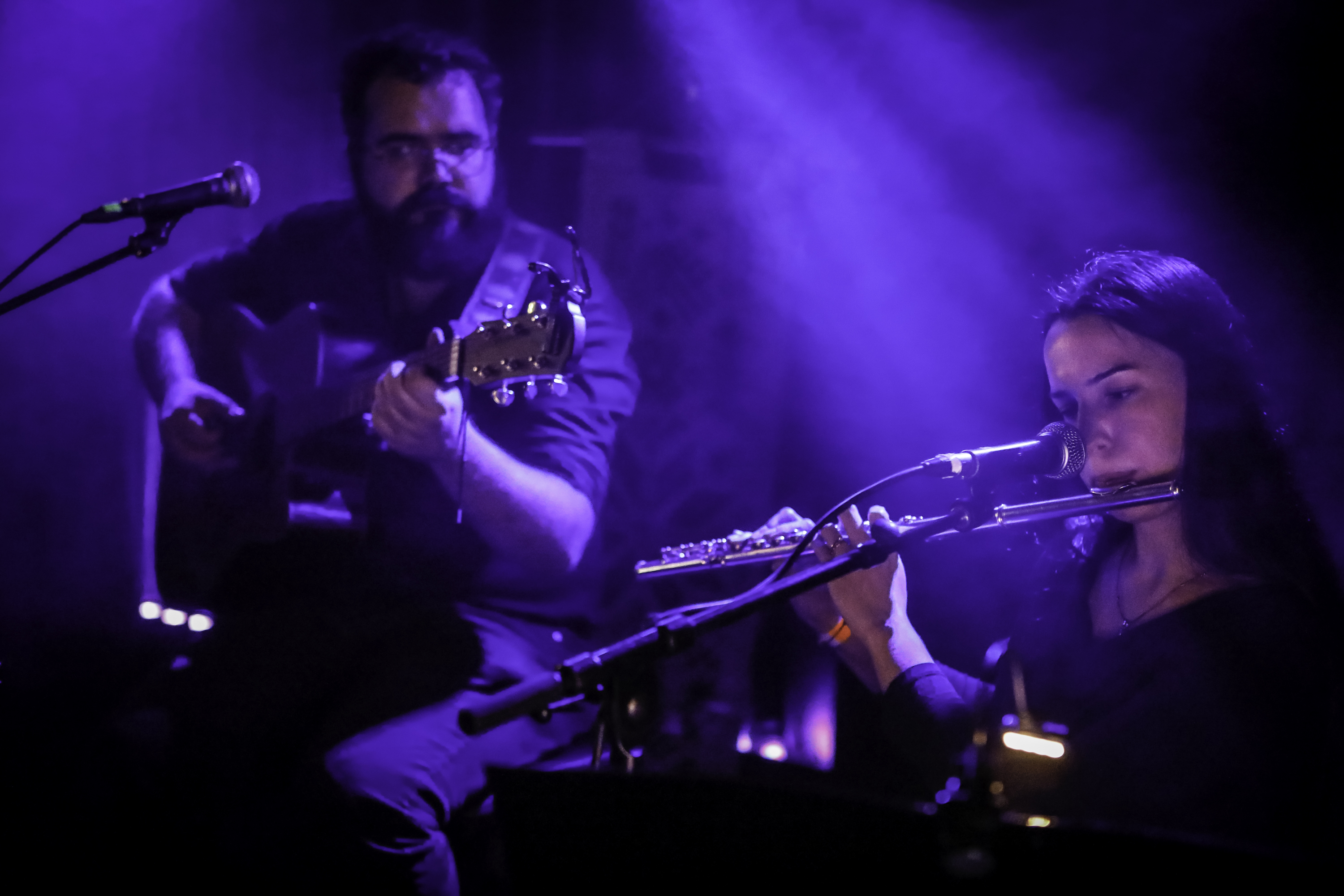
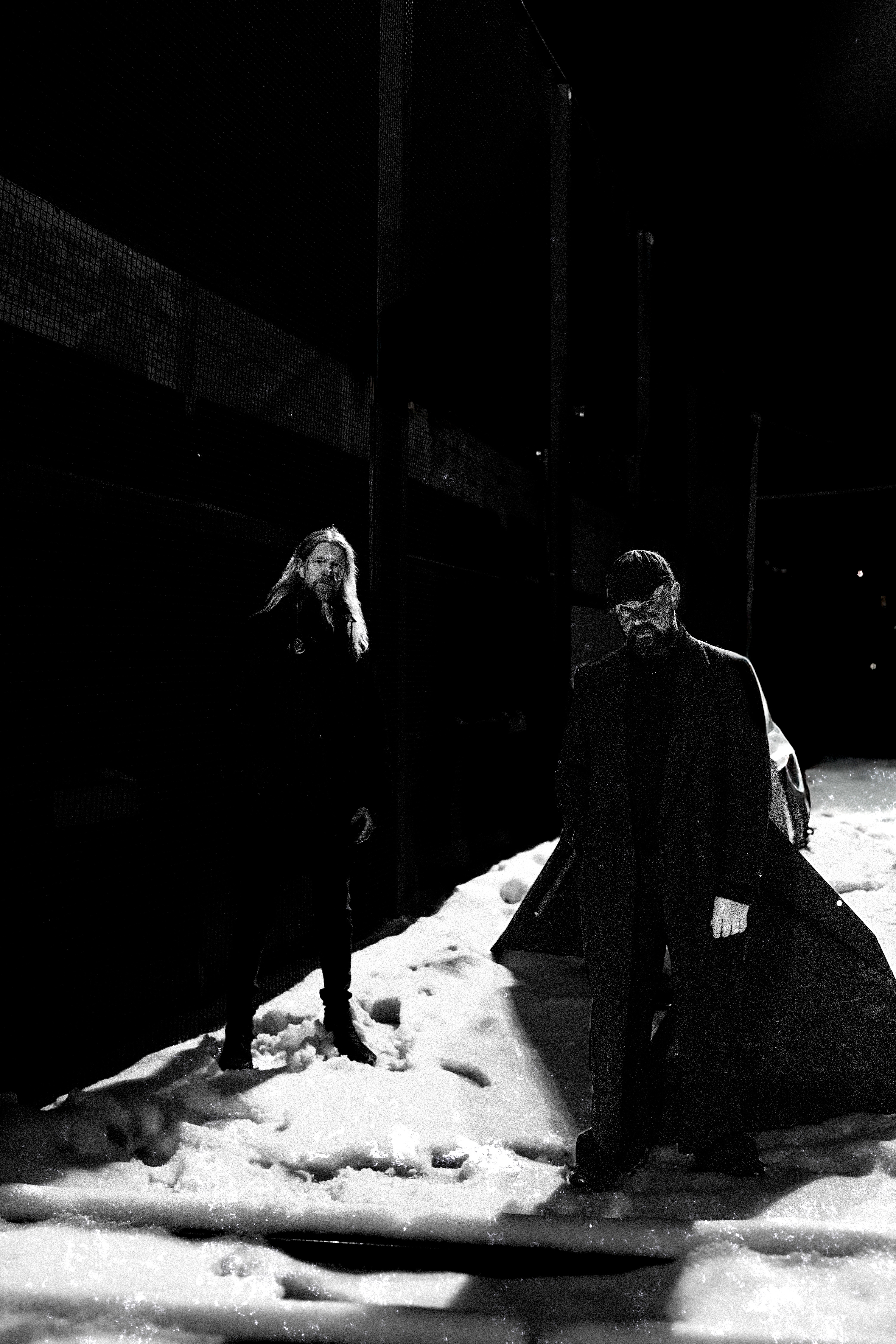
Photo: Arto Alho
Two very interesting bands, playing a genre I have personally never really explored, are set to perform at Geronimo on November 25th. We’re talking post-industrial neofolk. This is definitely an event worth checking out, even for those of us who are uninitiated. I highly recommend giving both bands a listen beforehand.
⸻
CROOKED MOUTH
Q: How did you end up playing in such an unconventional genre? Did it just happen organically, or was it something you consciously set out to create?
A: I just have a great love for toiling in obscurity with little chance of success! (… I joke, but maybe there’s a tiny bit of truth in it…).
I started my musical life in the Cascadian Black Metal scene of the early 2010s. I played black metal first. In this scene, there was a big crossover with neofolk, post-industrial, and other experimental music. There was also a deep interest in mysticism, magic, ritual, and obscure philosophies. After developing an interest in all these things, I naturally also developed an interest in the traditional folk music of various peoples.
I wanted to make some music to express some of the more subtle feelings without the fury that black metal requires, so I founded Crooked Mouth for this purpose around the winter solstice of 2012. It began with a simple reverence for the beauty of nature, and the contrast of light and darkness within it, and over time it has grown organically into an entity quite its own, rooted in a naturalistic aesthetic but exploring many other themes, be they historical, mythological, esoteric, or personal.
Q: Who are your influences? What kind of music were you exposed to growing up as kids?
A: There’s certainly too many influences to name. Adam and I are both lovers of all kinds of obscure and strange music, and we could find something in most genres that could influence us. But generally, I guess the influences on CM’s current sound would be British neofolk from the World Serpent era of the 1990s, late 1960s psychedelic folk and folk-rock, certain albums of traditional music, and the spirit of experimentation that defined early post-punk music.
As a kid growing up in western Canada, I discovered the band Rush around the age of 13, and my fate to become a musician was sealed. I actually grew up listening to 70s progressive rock. It was a very odd musical education for a young kid, as I didn’t care at all about the usual rock-music entry-point bands until much later. My favourites were Rush, Yes, Genesis, and King Crimson. This led to discovering Porcupine Tree, and through them Opeth, which got me into the world of extreme metal.
Adam grew up in London, so his musical upbringing was a bit different from mine and influenced by his location. He also travelled to Poland a lot as a child and was exposed to many things through Polish bootleg cassette culture. When it comes to extreme metal, we have a lot of the same references. Love for Norwegian black metal, for example. Later, as I did, he discovered the post-industrial scene, which has become a more direct reference point for our current sound.
Greta is from a smaller city in Lithuania and grew up as a fan of gothic metal (Type O Negative, HIM, etc.). She studied ethnomusicology at university and has had a classical musical education since she was a small child. She is very knowledgeable about Baltic and Slavic traditional music and listens to a lot of other things, like early music, chant, and that kind of thing.
Q: What are your lyrics about? They give the impression of grand, almost mythological tales. Is that a fair interpretation?
A: Yes, European mythology, esoteric philosophies, and how they apply to our lives are the main lyrical themes of the last few albums. Some earlier albums are about different things: family history, spirit-of-place. But through everything there’s a thread, perhaps best expressed as “an attempt to look behind what we see in everyday life”.
Q: Who are you, and what instruments do you play? How did you first meet, and what made you decide to start making music together?
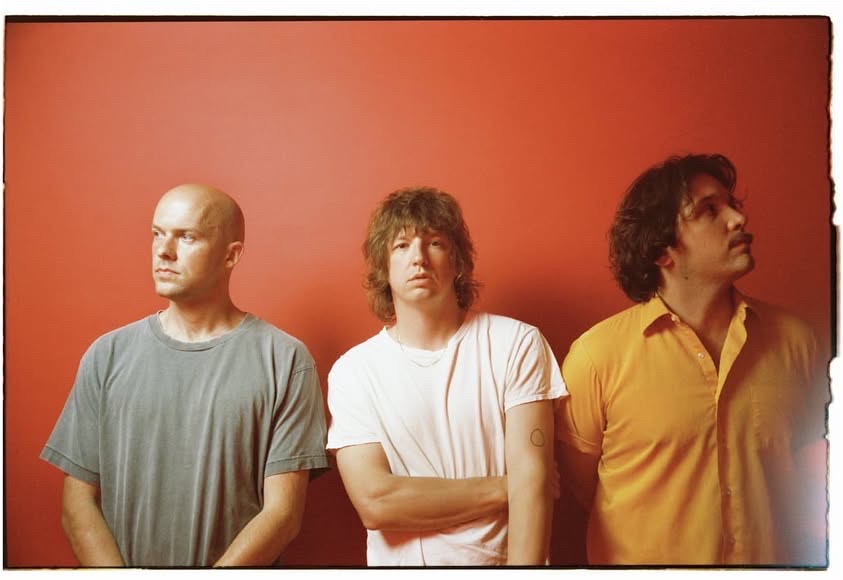
A: At the moment we find ourselves as a trio. I’m Ian, and when recording I play a lot of different instruments. When playing live I mostly play guitar and sing. Adam plays key instruments (harmonium, synth, glockenspiel), some percussion, and sings. Greta plays flute, a little guitar, and sings.
Adam and I met when I took a trip to Lithuania in 2020. When I moved there two years later, it was natural to seek him out and make something together, as we’d established from our first meeting that we were kindred spirits in this strange genre.
Greta and I originally met at a party for folk musicians about two weeks after I’d moved to Lithuania, but we were just acquaintances for many years. She was playing in a successful (and busy) folk metal band at the time. Later, I heard she had left that band, and I asked her to contribute a song (Kelias Kelelis) to our new album as a guest. She agreed, and we worked so well together during the recording session that it was obvious I needed to ask her to join the band as a full member. She happily accepted my offer.
Q: What’s the best gig you’ve played so far?
A: I suppose the one that gave us the greatest sense of satisfaction was our performance at Wave-Gotik-Treffen in 2025. It was the culmination of a lot of hard work, the response was great, and the overall behind-the-scenes experience was also very easy and fun.
Q: Do you really record and produce everything yourselves?
A: Yes. I’ve done that my whole life. Our latest album was mostly recorded in the basement of a Waldorf school, with a few songs recorded in my apartment and a few elements in a secluded cabin in rural Latvia.
I’ve only been in a professional studio once, as the subject of an acquaintance’s student project. We recorded one song, and a week later he had a breakdown and quit the school. I never heard the tracks I recorded ever again.
We do have a long-term collaboration with Nathaniel Ritter (Circulation of Light, Kinit Her, etc.), who helps to mix and master our albums. He gets them to really shine in a way I don’t have the skills to.
Q: What kind of unusual or unconventional instruments do you use, the sort of things you wouldn’t normally expect to find in a band?
A: People usually notice and ask questions about the Indian harmonium that Adam plays. We also sometimes use traditional instruments like the Lithuanian kanklės.
Q: What can the audience expect from your show this Wednesday?
A: This will be the first time Ian and Greta will play as a duo, so I think it will be something quite intimate. We’ve also created a setlist that fits this particular season, so the performance will have an autumnal feel, perhaps with a sense of melancholy that’s fitting for this time of year.
Q: If you had to describe your music in just five words, what would they be?
A: Rising together through the decline.
Q: What’s coming up next? Do you have any more gigs lined up, and if so, where can people catch you?
A: We play in Klaipėda, Lithuania, for the first time on December 18. Then, on January 30, we return to Leipzig for an event that will take place as a memorial for Sean Ragon of Cult of Youth.
There will be an announcement of one more show that’s currently being planned. But perhaps we’ll take some time away from making live plans and work on some new recordings as the winter draws to a close.
⸻
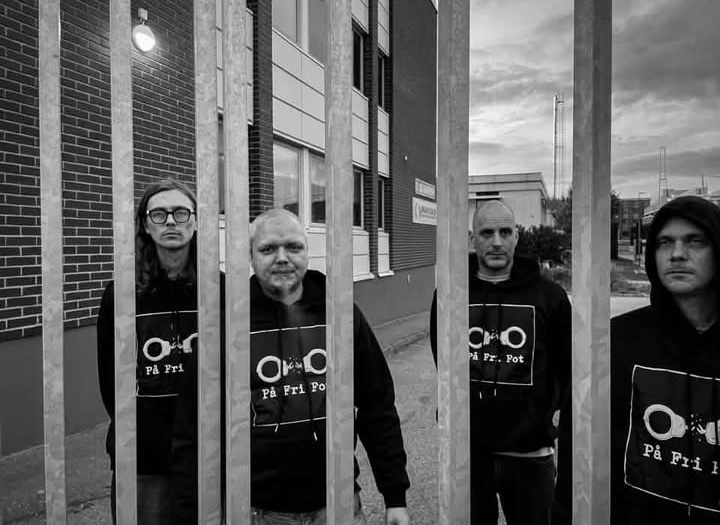
TRÄET-MUND-SPILLI
Q: How did you end up playing in such an unconventional genre? Did it just happen organically, or was it something you consciously set out to create? Who are your influences? What kind of music were you exposed to growing up?
A (Leon): It all started when a friend introduced me to Current 93 one day while we were hiking in Tyresta National Park. It didn’t quite click on the first listen, but I was gradually drawn further and further in, to the point where it became practically the only thing I listened to for almost three years. The music and lyrics resonated so strongly with me and with the state of resignation I found myself in at the time. I found that it helped me find a goal and a sense of purpose, as well as an attitude and an approach to making music.
There are almost too many influences on this project to list, and everyone in the band has their own influences that shape the creative process. I would say that the project takes its starting point from the experimental attitude found in the English industrial “scene” of the 80s and 90s, with bands like Throbbing Gristle, Psychic TV, Coil, and Current 93, all pioneers of their own respective genres.
Then there are bands that the whole group more or less looks up to collectively, such as SWANS and Godspeed You! Black Emperor. Naturally, other older experimental acts have also had an influence. Swedish progressive music, for example: Träd, Gräs och Stenar, Älgarnas Trädgård, Kebnekajse, and Ragnarök. Swedish folk music, of course. Skäggmanslaget, Blå Bergens Borduner, Väsen, Sara Parkman, Funeral Folk, and many others.
As a child, I was introduced to Frank Zappa at an early age, and I would often hear the opening notes of “Watermelon in Easter Hay” on Sunday afternoons while my parents were cleaning the house.
A (Nils): There was always a radio playing in every room when I was little, crackling away with the news, but very little music was played at home. Apparently, playing Led Zeppelin at full volume was a good way to comfort me whenever I cried as a baby.
Regardless of the later and arguably more relevant influences, I can say with great certainty that my interest in experimental music would probably never have developed into what it is today if I hadn’t heard Pink Floyd’s album A Saucerful of Secrets and John Cale’s viola on The Velvet Underground’s banana album.
Q: What are your lyrics about? They give the impression of grand, almost mythological tales.
A (Leon): The lyrics are written by me and are often personal, cryptic, vivid, and sometimes socially critical. Their purpose is to ignite the listener’s inner imaginative world and help deepen the intersubjective experience when we perform.
Writing them has also been a way for me to process traumatic and formative events in my life, and hopefully they can serve the same purpose for others.
Sometimes I also find it useful to incorporate excerpts or adaptations of other works that have influenced me in one way or another. Among these are influences from Georges Bataille, Antonin Artaud, and Snorri Sturluson’s Poetic Edda.
Q: Who are you, what instruments do you play, how did you first meet, and what made you decide to start making music together?
A (Leon): The project was started as a means of spiritual and creative expression, and has existed in several different line-ups over the years.
Initially, I had written the foundations of Alas, the Flowers Had Wilted and invited a group of musicians to collectively write an arrangement around its acoustic skeleton. That was the beginning of the painful but rewarding process of learning how to write music. Members have come and gone ever since, right up until the release of our debut album, Träet-Mund-Spilli.
Today, Träet consists of six permanent members who collectively compose the music they perform. Our instrumentation includes acoustic and electric guitars, electric bass, drums, trumpet, violin, synthesizer, electronics, and nyckelharpa. Other musicians sometimes join the line-up, contributing vocals, accordion, and saxophone.
One of the fundamental ideas behind the group is that the music should, in principle, be performable by either a single person or an entire orchestra.
Q: What kind of unusual or unconventional instruments do you use, the sort of things you wouldn’t normally expect to find in a band?
A (Leon): The amplified nyckelharpa is probably the most unusual instrument, and not something you would normally encounter in this kind of band configuration.
A (Nils): Sometimes the songs require me to play the guitar the way it’s traditionally meant to be played, but I’m primarily interested in using alternative playing techniques and signal processors to create textures that the ear doesn’t immediately recognise as the sound of a guitar.
Pelle Ossler’s use of the bow and Jochen Arbeit’s guitar parts on the later Einstürzende Neubauten albums are major sources of inspiration.
Q: What can the audience expect from your show on Wednesday?
A: The audience can expect two great, dynamic, and emotionally charged folk sets.
Q: If you had to describe your music in just five words, what would they be?
A: Apocalyptic folk with industrial elements.
Q: What’s coming up next? Do you have any more gigs lined up, and if so, where can people catch you?
A: On January 23, we’ll be playing at Spice 99 in their new premises by Slussen, which we’re all really looking forward to.
Otherwise, our focus right now is on finishing the arrangements for the material so that we can record a new album early next year.